


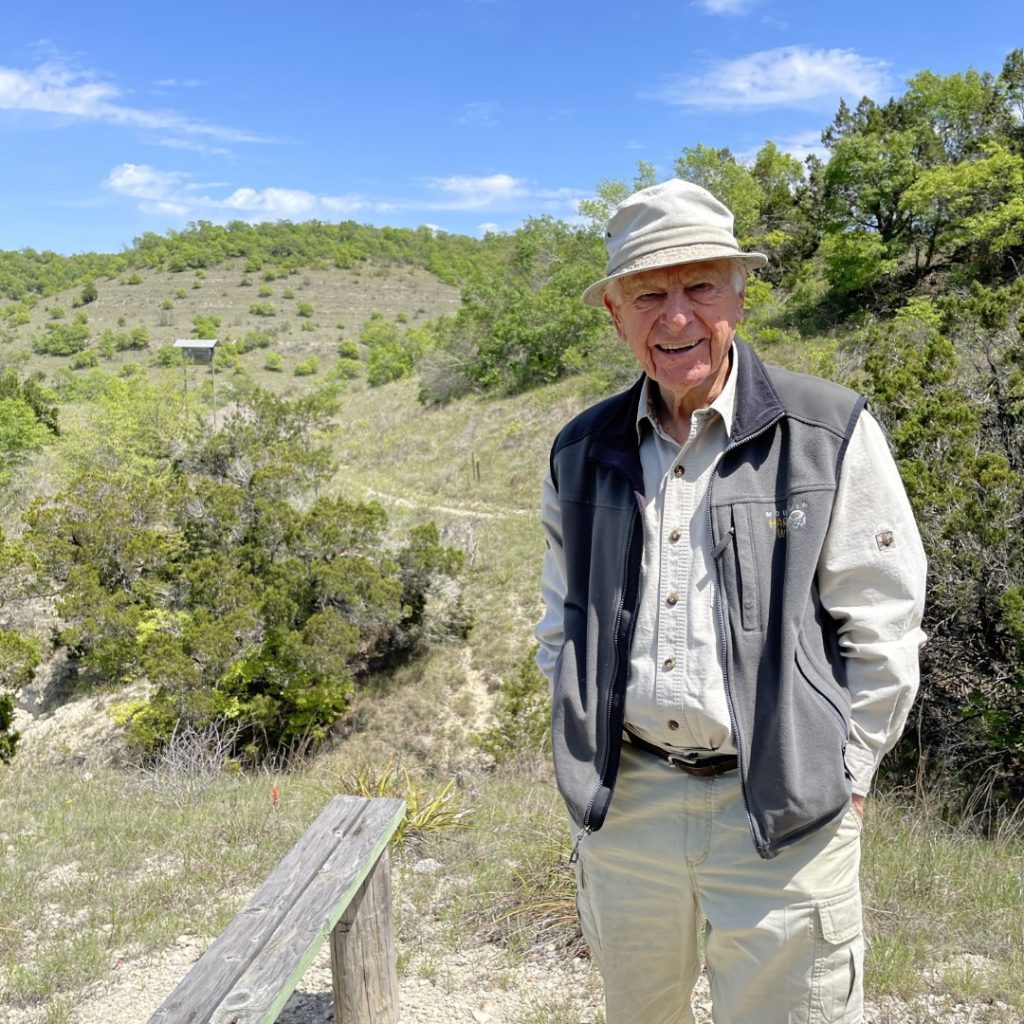
On January 17, 2026, we lost one of Texas’ great conservation voices. J. David Bamberger, the founder of Selah, the Bamberger Ranch Preserve, passed away peacefully surrounded by his family. He was 97 years old.
J. David lived nearly a century, and he filled those years with purpose. At the center of his life was a simple but powerful belief: that one person, with determination and hard work, really can leave the world better than they found it. Generosity defined him, as did his deep love of the outdoors. He often joked that the secret to a long life was simple—spend plenty of time outside and never miss an opportunity to laugh. His warmth, humor, and unwavering spirit will be remembered just as much as the extraordinary conservation legacy he leaves behind. Above all, he devoted his life to a vision of land that could be healed, protected, and restored in a way that would inspire people far beyond Texas.
One of J. David’s greatest joys was welcoming people to experience the ranch for themselves, especially young visitors. He believed strongly that children should have the opportunity to connect with nature, and he worked hard to make sure students from Title 1 schools in Austin and San Antonio—many from communities with limited access to the outdoors—could visit and learn firsthand about stewardship and conservation. Those experiences mattered deeply to him, and they will remain an important part of the preserve’s mission. Even as he grew older, he never lost his hands-on approach to the land. He could often be found outside working, continuing the physical labor of restoration almost to the very end of his life.
Over the course of his lifetime, J. David accomplished an incredible amount. Earlier in his career, he co-founded Church’s Fried Chicken with Bill Church, helping build a business that would grow across the country. But his interests extended far beyond business. He played a key role in protecting important landscapes throughout Texas, including land in West Texas as well as in Kendall and Comal Counties. Among his many conservation contributions was his involvement in securing the protection of Bracken Cave, ensuring the long-term preservation of one of the world’s most significant bat habitats.
Yet despite all of these achievements, the place that meant the most to him was Selah—Bamberger Ranch Preserve in Blanco County. The ranch stands today as a remarkable example of what dedicated land restoration can accomplish. This idea of land restoration was cemented in his head at the age of 14 when he read a book about a farmer who restored 300 acres of farmland in Ohio. He purchased the 5500 acre ranch in 1969 for $124 per acre. He had said that, when he purchased the ranch, there were about 3000 acres of “wall-to-wall” cedar trees. What was once heavily degraded land has been transformed into a thriving landscape that now serves as a model for landowners, conservationists, and land managers from across the country. J. David remained closely involved with the ranch and its programs throughout his life, continuing to guide its work and share its lessons with visitors. The impact of his efforts will continue to ripple outward for generations.
His role in the protection of Bracken Cave is another example of his commitment to conservation. In the early 1990s, he worked alongside Merlin Tuttle and the Ewing Halsell Foundation of San Antonio to help secure the cave’s future. Partnering with the Marbach family, who owned the property at the time, he helped facilitate its purchase for Bat Conservation International so that it could be permanently protected. After the acquisition, J. David personally funded much of the infrastructure that made the site accessible and secure—constructing trails, fencing, observation areas, and other improvements needed to responsibly manage the site.
He also created the first man-made bat cave in the world at his Bamberger Ranch Preserve. He coined the term “Chiroptorium” to describe the project which now create home for as many as 500,000 Mexican free-tailed bats.
That kind of personal investment was typical of him. When J. David believed in a cause, he didn’t just lend his name to it—he rolled up his sleeves and got to work.
Texas—and the conservation community far beyond it—owes a great deal to J. David Bamberger. His legacy lives on in the land he restored, the people he inspired, and the generations who will continue learning from the example he set.
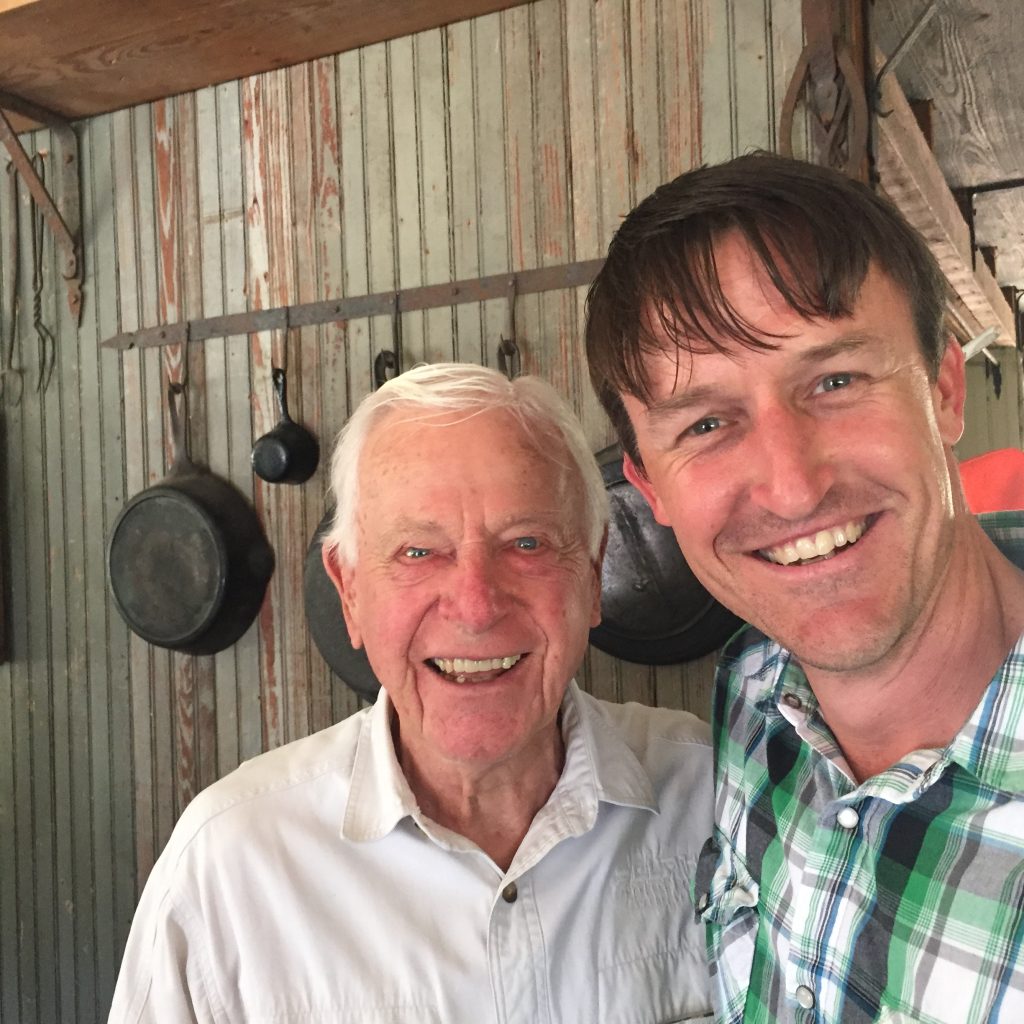
I was fortunate enough to meet J. David and send some time with him, learning about the Selah, the Bamberger Ranch Preserve. From his story and his legacy, he inspires me to continue working diligently to promote the ethos of conservation here in Texas.
If you want to learn more about J. David’s amazing life, please visit the following websites or check out these books.
Selah, Bamberger Ranch Preserve
Book: My Stories, All True: J. David Bamberger on Life as an Entrepreneur and Conservationist
Book: Water from Stone: The Story of Selah, Bamberger Ranch Preserve




Thank you for writing this article and including it on the Innovative Water Solutions webpage. In the early 2000’s, I took my 10th and 12th-grade students from the Austin Waldorf School to Selah for practical components of environmental sciences and ecology practical courses. Later, I took my husband to various workshops on water and land management. I have fond memories of the Bamberger’s, especially David whose land managers gave us many tips to manage Texas Hill Country land for native plants and animals. At Tonalacalli, the eco-house I co-designed and co-own, we harvest rainwater for our household use and surrounding pollinator gardens, as well as catching rainwater in a gulley cistern for wildlife. David Bamberger will be sorely missed.
Laurel, thank you for your comment! Yes, David was the type of passionate person for land stewardship that we needed in Texas. I know I will be trying to carry on his passion and I know that there are many others, like yourself, who will also be carrying his message onward. I read your website for Tonalacalli. Very inspirational! Your project is definitely a shining example of stewardship!
HI Chris, Thanks for the nice article about my stepdad, J. David Bamberger. He made an amazing contribution to Texas and the world beyond, not only for Selah and the work he accomplished there but more so by his belief that every person has the potential to make a profoundly positive difference in the world–and we all should try to be that change. My husband, Bill Montgomery, and I hired IWS back in 2011 to install our rainwater system at our home in Elgin. Thanks for your fine work.
Margie, thank you so much for your comment! David will be missed. I want to thank YOU for all of your amazing contributions to environmental education and stewardship through your many wonderful books and artwork! You are carrying on David’s legacy!